On-Page SEO: Structuring Content for Clarity, Relevance, and AI Visibility
Clarity is what search engines reward. Confusion is what they filter out.
If Technical SEO is the engine that powers the car, and Keyword Strategy is the map that determines the destination, then On-Page SEO is the actual driving experience. It is the point where strategy becomes visible. It is where intent, content goals, and user expectations meet on the digital page.
For years, on-page optimization was treated as a checklist of mechanical tasks: repeat the keyword five times, bold it once, and put it in the image alt tag. But as search engines have evolved from simple pattern matchers to complex semantic understanding engines, this approach has become obsolete.
Today, on-page seo is an exercise in communication. It is about organizing information so effectively that both a human user and a sophisticated AI bot can understand the context, value, and hierarchy of your content instantly.
When done well, on-page optimization helps search engines understand exactly what a page is about. When done poorly, even the best content gets lost in the noise.
This guide explores on-page optimization not as a series of hacks, but as a framework for clarity. We will look at how structure signals relevance, why “keyword stuffing” destroys trust, and how to optimize your pages for the new era of Generative AI.
Part 1: The Philosophy of On-Page Clarity
The “Translator” Mindset
To succeed in modern search, you must view on-page seo as a translation layer.
You have a concept in your head (your expertise). You have a user with a question. Between you stands a machine (Google) trying to connect the two.
The machine does not read like a human. It scans. It looks for patterns, logic, and relationships.
- Chaos: A 2,000-word wall of text with no breaks, generic headings, and wandering topics. The machine is confused. It doesn’t know what is important.
- Clarity: A structured page with clear headings, logical progression, and distinct topic sections. The machine is confident. It knows exactly how to categorize the page.
When signals are consistent and intentional, pages perform better—not because they are “tricking” the algorithm, but because they are easy to interpret.
Why Context Beats Frequency
In the early days of the web, search engines ranked pages based on “keyword density.” If you wanted to rank for “blue running shoes,” you wrote “blue running shoes” as many times as possible.
Today, Google uses Natural Language Processing (NLP) to understand context.
If you are writing about “Apple,” Google looks at the surrounding words to determine if you mean the fruit (recipes, pie, orchard) or the technology company (iPhone, Mac, stock).
This means your seo best practices must shift from repetition to completeness. On-page SEO is now about covering a topic so thoroughly and logically that the search engine sees you as the definitive authority.
Part 2: The Architecture of Relevance (Headings & Hierarchy)
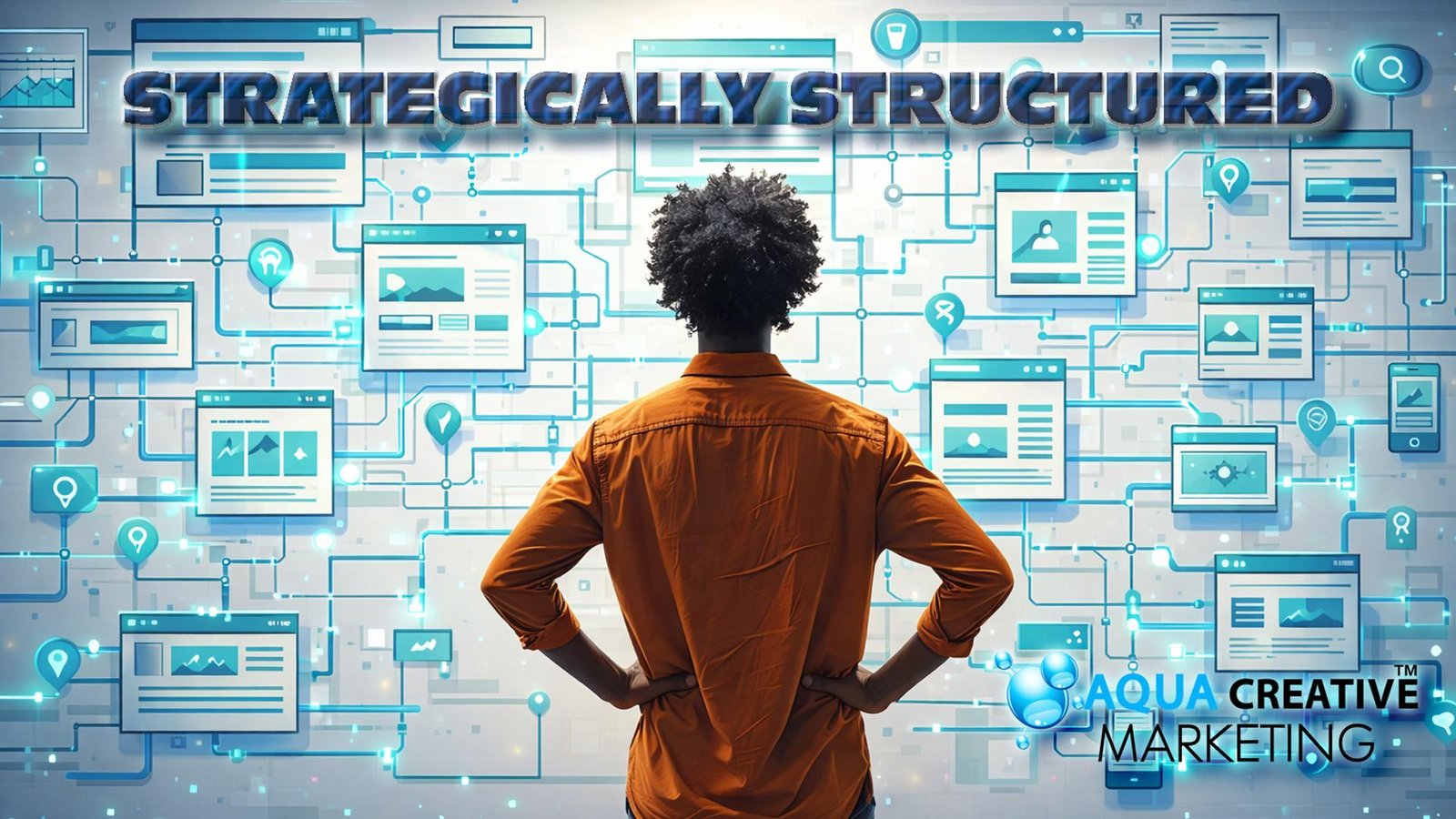
Structure is not just aesthetic; it is semantic data.
The most powerful tool in seo content structure is the Heading Tag (H1, H2, H3, etc.). These tags act as a table of contents for the search engine.
The H1: The Promise
Every page should have exactly one H1 tag. This is your headline. It tells the search engine, “This is the main topic of the document.” It must align perfectly with the user’s search intent.
The H2s and H3s: The Roadmap
Your subheadings (H2s) and nested subheadings (H3s) create a hierarchy.
- Bad Structure: Using bold text instead of H-tags. (Google sees this as just text, not a structural signal).
- Good Structure:
- H1: Complete Guide to Commercial Roofing
- H2: Types of Roofing Materials
- H3: TPO Roofing
- H3: Metal Roofing
- H2: Maintenance Costs
- H2: Types of Roofing Materials
- H1: Complete Guide to Commercial Roofing
This hierarchy tells Google that “TPO Roofing” and “Metal Roofing” are subsets of “Types of Roofing Materials,” which is a subset of “Commercial Roofing.” You are teaching the algorithm how these concepts relate to one another.
GEO Tip: Optimizing Headings for AI
AI tools (like Google’s AI Overviews or ChatGPT) rely heavily on headers to extract answers.
To optimize for Generative Engine Optimization (GEO), write your H2s as questions that users ask (e.g., “What is the cost of TPO roofing?”) and answer that question directly in the first sentence immediately following the header. This makes it easy for the AI to “cite” your content.
Part 3: Internal Linking as a Nervous System
If headings provide the skeleton, internal links provide the nervous system.
Internal links (hyperlinks that point from one page on your site to another) are one of the most underrated aspects of on-page seo.
Distributing Authority
When you link from a high-authority page (like your Homepage) to a new blog post, you are passing “link juice” (authority) to that new page. You are telling Google, “I trust this page, and you should too.”
Establishing Topical Relevance
Links define relationships.
If you write a blog post about “SEO Strategy” and you link to your “Web Design Service” page, you are telling Google that there is a relationship between SEO and Web Design on your site.
However, if you link your “SEO Strategy” post to your “SEO Audit Service” page, the connection is much stronger and more relevant.
The Strategy:
- Anchor Text Matters: Do not use “Click Here.” Use descriptive anchor text like “learn more about on-page optimization.” This tells the search engine what the destination page is about before it even gets there.
- The Cluster Model: Link heavily between related content. All your “SEO” articles should link to each other, creating a tight web of relevance that is hard for competitors to break.
Part 4: Beyond Keywords: Entity-Based SEO
We mentioned that “keyword stuffing” is dead. It has been replaced by Entity-Based SEO.
An “entity” is a concept—a person, place, thing, or idea that is distinct and independent. Google understands entities.
- Old Way: Target the keyword “marketing agency.”
- New Way: Target the entity “marketing agency” and support it with related entities like “lead generation,” “ROI,” “branding,” “PPC,” and “digital strategy.”
How to Write for Entities
Don’t worry about counting keywords. Worry about vocabulary.
If you are writing an expert guide on on-page optimization, you would naturally use words like “HTML,” “meta tags,” “user experience,” and “crawlability.”
If those words are missing, Google doubts your expertise.
On-page SEO involves ensuring your content contains the “semantically related” terms that an expert would naturally use. This validates your content’s depth and relevance.
Part 5: Optimizing for the “Skim-Reader” (and the Bot)
User experience (UX) is an SEO factor. If a user lands on your page, sees a massive wall of text, and immediately hits the “Back” button, that is a negative signal (low Engagement Rate).
Seo content structure must cater to the modern, impatient web user.
Visual Hierarchy
- Short Paragraphs: Keep paragraphs to 2-3 sentences max. This creates white space, which is easier on the eyes.
- Bullet Points: Lists (like this one) are easier to scan than sentences. (Search engines also love lists because they are easy to extract for Featured Snippets).
- Bolding: Use bold text strategically to highlight key insights. This guides the user’s eye down the page.
Media Optimization
Images and videos are part of on-page SEO.
- Alt Text: Search engines cannot “see” images. Alt text describes the image to the bot. (e.g., “Chart showing the correlation between site speed and conversion rate”). This is also crucial for accessibility.
- File Names: IMG_1234.jpg tells Google nothing. on-page-seo-checklist.jpg tells Google exactly what the image is.
Part 6: Meta Tags: The Advertisement
While the content is king, the Meta Title and Meta Description are the palace gates. These are the elements that appear in the search results page (SERP).
They do not directly impact rankings as much as they used to, but they massively impact Click-Through Rate (CTR).
The Meta Title
This is the most critical on-page element. It must contain your primary keyword and a compelling reason to click.
- Boring: “On-Page SEO Guide”
- Compelling: “On-Page SEO: The Ultimate Guide to Ranking Higher in 2024”
The Meta Description
This is your elevator pitch. It should sell the benefit of clicking.
- Strategy: Include a call to action or a curiosity hook. “Learn why 90% of pages fail to rank and the simple structural fix that changes everything.”
Part 7: Generative Engine Optimization (GEO)
As we move into an AI-first world, on-page seo is changing. Large Language Models (LLMs) like ChatGPT and Google Gemini read pages differently than traditional bots.
They focus on information gain and authority citations.
How to Optimize On-Page for AI:
- The “BLUF” Method (Bottom Line Up Front): Don’t bury the answer. If your header is “How long should a blog post be?”, the very next sentence should be, “The ideal length for a blog post varies, but typically falls between 1,500 and 2,500 words.” AI loves direct answers.
- Quotable Stats: Include original data or expert quotes. AI looks for unique “facts” to cite.
- Structured Data (Schema): We touched on this in Technical SEO, but it applies here too. Marking up your FAQ section with FAQ Schema makes it incredibly easy for an AI to pull your Q&A directly into an answer.
Part 8: Measuring Success with GA4
How do you know if your on-page optimization is working? You look at how users interact with the content using Google Analytics 4 (GA4).
Traditional metrics like “Time on Page” are flawed. We need to look deeper.
Scroll Depth
Are users actually reading? You can configure GA4 to fire events when a user scrolls 25%, 50%, and 90% down the page.
- Insight: If 100% of users see the H1, but only 10% reach the H2, your intro is weak or your layout is confusing.
Engagement Rate
This metric tells you the percentage of sessions that were “meaningful” (lasted longer than 10 seconds or converted).
- Insight: High traffic with low Engagement Rate usually means the on-page content did not match the search intent (the Title promised something the page didn’t deliver).
Site Search Usage
If users land on your page and immediately use your internal search bar, it means your navigation or page structure failed to get them to the right place. They are lost.
Part 9: How On-Page SEO Supports Conversions
This is the bottom line. On-page optimization is not just about getting traffic; it is about prepping that traffic to take action. Conversion doesn’t happen in a vacuum. It is shaped by the experience leading up to the “Buy” button.
- Trust: Professional formatting and a clear seo content structure build subconscious authority.
- Clarity: Strategic headers help the user quickly confirm, “Yes, this company solves my problem.”
- Flow: Intent-based internal links guide the user from “Informational” (Blog) to “Commercial” (Services) pages.
The Aqua Creative Approach: Engineering On-Page SEO for GEO Outcomes
At Aqua Creative Marketing, we treat your on-page SEO as the critical bridge between technical health and human action. We go beyond basic checklists by integrating a proprietary framework that boosts both traditional rankings and AI visibility (GEO):
- Semantic Entity Mapping: We don’t just “keyword stuff.” We build a comprehensive seo content structure around “entities”; related concepts that AI models like Google Gemini and SearchGPT use to verify your expertise.
- Automated Schema Integration: Every element of your on-page optimization is backed by invisible JSON-LD Schema. This tells AI engines exactly where your “Pros/Cons,” “FAQs,” and “Service Pillars” are located, increasing your chances of being the “cited answer.”
- UX-Driven Hierarchy: We align your visual layout with your digital strategy. By optimizing for the “Skim-Reader” and the “AI Bot” simultaneously, we ensure that your most persuasive points are identifiable at first glance, within the first three seconds.
When structure is intentional, relevance increases, and conversions follow naturally. We don’t just optimize for the algorithm; we optimize for the human decision-making process.
Part 10: The Cost of Neglect
Ignoring your on-page SEO is like printing a brochure with no headlines, no paragraphs, and random photos. The information might be there, but no one is going to work hard enough to find it.
If your pages are ranking inconsistently, struggling to engage visitors, or failing to convert interest into action, your seo content structure is likely the limiting factor. In the era of AI-driven search, “messy” content is invisible content.
Conclusion & Next Steps
The era of “tricking” Google is over. The era of communicating with Google has arrived. By focusing on structure, clarity, hierarchy, and intent through rigorous on-page optimization, you create pages that are future-proof.
It requires effort and strategic planning, but the result is a website that serves as a 24/7 salesperson; articulate, helpful, and persuasive.
Ready to reveal exactly where clarity is breaking down on your website?
Let’s look at your structure together and restore relevance, engagement, and performance.
Free On-Page SEO Performance Review or Client Check-In