
Technical SEO: The Invisible Infrastructure That Determines Your Visibility
Because the most persuasive message in the world is useless if the messenger can’t find the door.
Technical SEO is often treated as the “dark art” of digital marketing. It is viewed as an intimidating, behind-the-scenes discipline reserved for developers, coders, and IT specialists. For many business owners and marketing leads, it is a line item on a report that they hope is green but rarely understand.
In reality, technical SEO is the most practical and essential component of search visibility. It is the foundation upon which every other marketing effort rests. Without a technically sound infrastructure, even the most brilliant content strategy and the most aggressive keyword research will struggle to perform.
Think of your website like a high-performance vehicle. Content is the fuel. Backlinks are the accelerator. But technical SEO is the engine and the chassis. If the fuel line is blocked (crawl errors) or the tires are flat (slow load speeds), it doesn’t matter how premium your fuel is—the car isn’t going anywhere.
This guide demystifies technical SEO. Moving away from jargon and code snippets to focus on clarity, stability, and trust. We will explore how search engines actually access your site, why infrastructure impacts your bottom line, and how to future-proof your digital presence for the era of AI.
Part 1: The Philosophy of Infrastructure
Why Search Engines Don’t See What You See
To understand technical SEO, you must first understand the “user” you are trying to please: the search bot (often called a “spider” or “crawler”).
When a human visits your website, they experience design, emotion, and persuasion. They see colors, read headlines, and feel a connection to your brand voice.
Search engines do not have feelings. They do not experience “design.” They rely entirely on structure, signals, and accessibility to understand what a site contains and how it should be evaluated. They view your website as a raw text file, a series of links, and a set of instructions.
Technical SEO exists to bridge the gap between the human experience and the machine’s interpretation.
- It ensures the bot can enter the site.
- It ensures the bot can understand the map of the site.
- It proves to the bot that the site is stable, safe, and fast enough to recommend to human users.
When technical clarity is missing, visibility suffers not because your message is weak, but because the infrastructure obscures it. The search engine simply moves on to a site that is easier to read.
The Concept of “Crawl Budget”
Every website is allocated a certain amount of attention from Google. This is known as “crawl budget.” If your site is technically messy; full of broken links, endless redirect loops, or slow-loading scripts, the search bot wastes its budget trying to navigate the mess. It may leave before it even reaches your most important revenue-generating pages simply because of your site crawlability issues.
Technical efficiency respects the search engine’s resources. When you make a site easy to crawl, you are essentially rolling out a red carpet for the algorithm.
Part 2: The Three Pillars of Technical Visibility
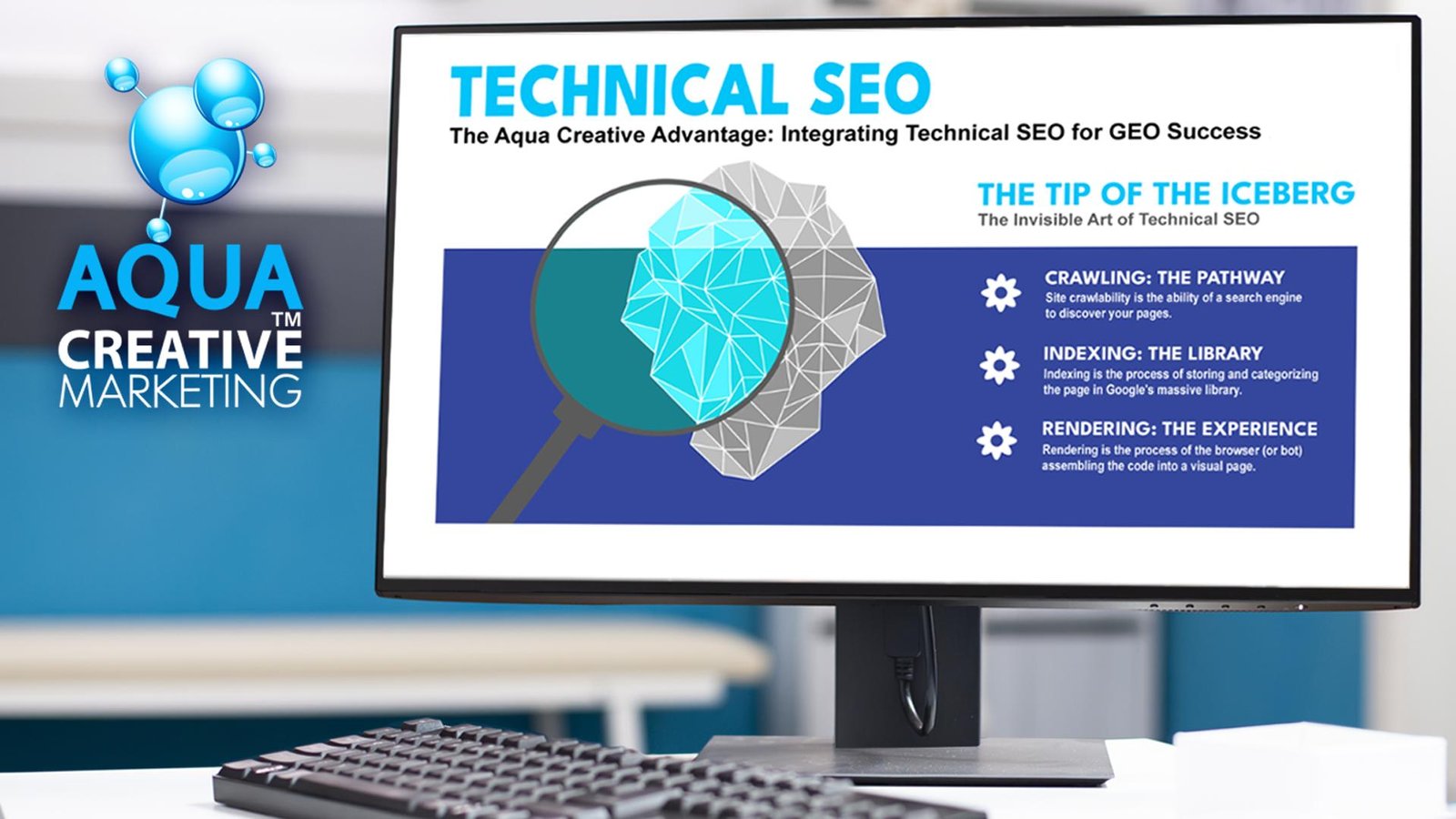
If we strip away the complexity, technical SEO comes down to three core actions: Crawling, Indexing, and Rendering.
Crawling: The Pathway
Site crawlability is the ability of a search engine to discover your pages.
Crawlers navigate the web by following links. They jump from one site to another, and from your homepage to your internal pages, using links as highways.
- The Ideal State: A spider lands on your homepage and can reach any page on your site within 3 clicks. The pathways are clear, and the doors are open. Congratulations, you’ve “maxed out” your site crawlability.
- The Technical Failure: The spider hits a “404 Not Found” error (a dead end). Or, it gets trapped in a “spider trap” (an infinite loop of calendar pages or filter parameters).
- The Fix: We use tools like XML Sitemaps (a literal map for the bots) and robots.txt files (instructions on where not to go) to guide the crawler efficiently.
Indexing: The Library
Once a page is crawled, it must be indexed. Indexing is the process of storing and categorizing the page in Google’s massive library.
Just because a page exists doesn’t mean it’s in the index.
- The Ideal State: You explicitly tell Google which pages are valuable (canonical tags) and which pages should be ignored (noindex tags).
- The Technical Failure: Accidental “noindex” tags on critical sales pages (telling Google to ignore them). Or, “duplicate content” issues where five different URLs all show the same product, confusing the librarian about which one to file.
- The Fix: Clear directives. We use “Canonical Tags” to tell Google, “This is the master version of this page; please rank this one.”
Rendering: The Experience
In the modern web, pages aren’t just static text; they are dynamic experiences built with JavaScript. Rendering is the process of the browser (or bot) assembling the code into a visual page.
- The Ideal State: The page loads instantly, and all content is visible to the bot immediately.
- The Technical Failure: The content relies on heavy JavaScript that takes 5 seconds to load. The bot might arrive, see a blank white screen, and leave before the text appears.
- The Fix: Server-side rendering or dynamic rendering ensures the bot sees the full content immediately, without having to wait for scripts to execute.
Part 3: SEO Site Structure and Architecture
If technical code is the plumbing, seo site structure is the architecture of the house. A chaotic structure confuses users and engines alike.
The “Flat” vs. “Deep” Architecture
A common technical mistake is burying content too deep. If a user has to click Home > Services > Consulting > Enterprise > North America > Strategy, that page is buried six layers deep. Search engines assume that pages buried deep in the structure are less important.
We strive for a “flat” architecture where high-value pages are never more than a few clicks from the homepage. This passes “link equity” (authority) from your main pages down to your specific product or service pages.
Internal Linking: The Nervous System
Internal links are not just for navigation; they are context signals.
If you have a page about “Commercial Roofing,” but you never link to it from your blog or your homepage, you are creating an “Orphan Page.”
- Orphan Pages: These are pages that exist but have no incoming internal links. To a search engine, an orphan page is like a room in a house with no door. It is nearly impossible to find and rank.
Strategic internal linking connects related content, creating “topic clusters” that demonstrate authority to the search engine. It tells the crawler, “This cluster of pages is all about Technical SEO, and they are all related.”
Part 4: Core Web Vitals and The Trust Signal
For years, Google has emphasized that user experience is an SEO factor. This was formalized with “Core Web Vitals.”
Performance is a trust signal. Slow-loading pages frustrate users and signal instability to search engines.
- LCP (Largest Contentful Paint): How fast does the main content load? (Target: < 2.5 seconds)
- INP (Interaction to Next Paint): How quickly does the page react when a user clicks a button?
- CLS (Cumulative Layout Shift): Does the page jump around while loading, causing users to misclick?
Mobile Readiness is Non-Negotiable
Most searches now occur on mobile devices. Google uses “Mobile-First Indexing,” which means it looks at the mobile version of your site first to determine your rankings.
If your desktop site is perfect but your mobile site is broken, you are effectively broken in Google’s eyes.
Technical SEO issues often hide on mobile. Elements might overlap, text might be too small, or buttons might be too close together. These aren’t just design flaws; they are ranking demotions waiting to happen.
Part 5: Clean Code as a Future-Proofing Strategy (GEO)
We are entering a new era of search: Generative Engine Optimization (GEO).
This is the practice of optimizing content not just for traditional search links, but for AI-driven answers (like Google’s AI Overviews, ChatGPT, and Perplexity).
How AI Reads Code
AI models are “prediction machines.” They ingest vast amounts of text and try to predict the best answer to a user’s question.
Clean, semantic code makes this prediction easier.
- Structured Data (Schema Markup): This is the language of AI. It is invisible code that explicitly tells the machine what the content is.
- Without Schema: “Aqua Creative Marketing, 5 stars.”
- With Schema: “Entity: Organization. Name: Aqua Creative Marketing. Aggregate Rating: 5/5. Review Count: 150.”
- Why it Matters: When an AI engine (like ChatGPT) crawls the web to answer “Who is the best marketing agency?”, it prioritizes sources that provide structured, confident data.
The Cost of Bloated Code
Many websites are built on heavy page builders that generate messy, bloated code. This “code bloat” confuses AI models. If the ratio of code-to-text is too high, the machine struggles to extract the relevant facts.
Technical SEO involves streamlining this code (minification) to ensure the actual content—the answers—is front and center for the AI to ingest.
Part 6: Diagnosing Health with GA4
You don’t need to be a developer to spot seo technical issues. You can use Google Analytics 4 (GA4) to identify symptoms of technical failure.
Technical SEO isn’t just about rankings; it’s about usability. If users are leaving, the tech might be broken.
Issue One: The “File Not Found” Report
In GA4, you can track page titles. Search for the title “Page Not Found” or “404.”
If you see traffic landing on these pages, it means you have broken links somewhere on the web (or internally) that are sending users to dead ends.
- The Fix: Set up a 301 redirect to guide that traffic to a relevant, live page.
Issue 2: Tech Breakdown by Device
Go to the “Tech” report in GA4. Look at engagement rates split by Browser (Chrome vs. Safari) or Device (Mobile vs. Desktop).
- The Red Flag: If your Desktop engagement rate is 60% but your Mobile engagement rate is 10%, you have a technical rendering issue on mobile. The site might be unresponsive, or a popup might be unclosable on small screens.
Issue 3: Server Response Time
While GA4 focuses on user events, you can infer server health by looking at engagement time. If “average engagement time” is 0-1 seconds for a specific page, it often means the page never fully loaded for the user before they bounced.
Part 7: The “Silent Killers” of Growth
There are specific technical seo issues that silently kill growth. These issues don’t trigger “site down” warnings, but they act as anchors, slowing site crawlability and dragging down your performance month after month.
HTTPS and Security
Security is a ranking factor. If your site still runs on HTTP (insecure) instead of HTTPS (secure), browsers will label it “Not Secure.” This scares users away instantly.
Furthermore, mixed content errors (where a secure page loads an insecure image) can block rendering entirely in some browsers.
Duplicate Content (Cannibalization)
This occurs when multiple pages on your site compete for the same keyword.
- Example: You have a “Services” page, a “Services – 2024” page, and a “Services – Draft” page that was accidentally published.
- The Result: Google doesn’t know which one to rank, so it ranks none of them well.
- The Fix: Technical auditing identifies these duplicates and consolidates them using 301 redirects or canonical tags.
Server Response Time
Ideally, if a user clicks an old link, they are redirected once to the new page (A > B).
A “redirect chain” happens when A redirects to B, which redirects to C, which redirects to D.
This slows down the load time significantly and wastes crawl budget. After a certain number of hops, the Googlebot will simply stop following the chain, and the destination page will remain unindexed.
Part 8: Technical SEO as Long-Term Stability
Technical SEO isn’t about chasing algorithm updates; it’s about building a site that remains resilient as search evolves. When your infrastructure is solid, changes in content, strategy, or competition are easier to absorb. You stop worrying about why your rankings dropped overnight and start focusing on how to expand your market share.
The Aqua Creative Advantage: Integrating Technical SEO for GEO Success
At Aqua Creative Marketing, we don’t view technical SEO as a one-time “fix,” but as a continuous integration process designed to bridge the gap between human readability and AI synthesis. Our specific framework integrates technical health directly into SEO/GEO outcomes through:
- Dynamic Schema Deployment: We don’t just add basic tags; we build custom Linked Data graphs. This allows AI engines like Perplexity or ChatGPT to understand the relationship between your services, your location, and your authority, increasing the likelihood of being cited as a primary source.
- Code-to-Content Ratio Optimization: We perform deep “code surgery” to remove the bloat common in modern site builders. By prioritizing Server-Side Rendering (SSR), we ensure that AI crawlers see your full “answer” instantly without the lag of client-side scripts.
- Automated Redirect & Health Monitoring: We treat technical SEO as preventive maintenance. Using real-time monitoring, we catch 404s and redirect chains before they can deplete your crawl budget or damage your trust signals with Google.
When the foundation is stable, everything built on top of it becomes more effective. Your blog posts rank faster. Your ad landing pages convert better because they load faster. Your brand appears more authoritative in AI search results because the data is “clean” for the machines to read.
A technically sound site doesn’t draw attention to itself. It quietly supports visibility, performance, and trust. Exactly as your infrastructure should.
Summary: The ROI of Clarity
If your site feels inconsistent, ranking well one week and disappearing the next, or if users complain that it feels “clunky” on mobile, technical debt is likely the culprit.
Fixing these issues is often the highest-ROI activity you can undertake. It unlocks the potential of the content you already have and prepares your business for the generative future.
Ready to reveal what’s holding your visibility back and restore stability?
Free Technical SEO Performance Review or Client Check-In